Work / Ti-Me
case study · desktop · time trackingTi-Me: a time tracker that records quietly and lets you decide.
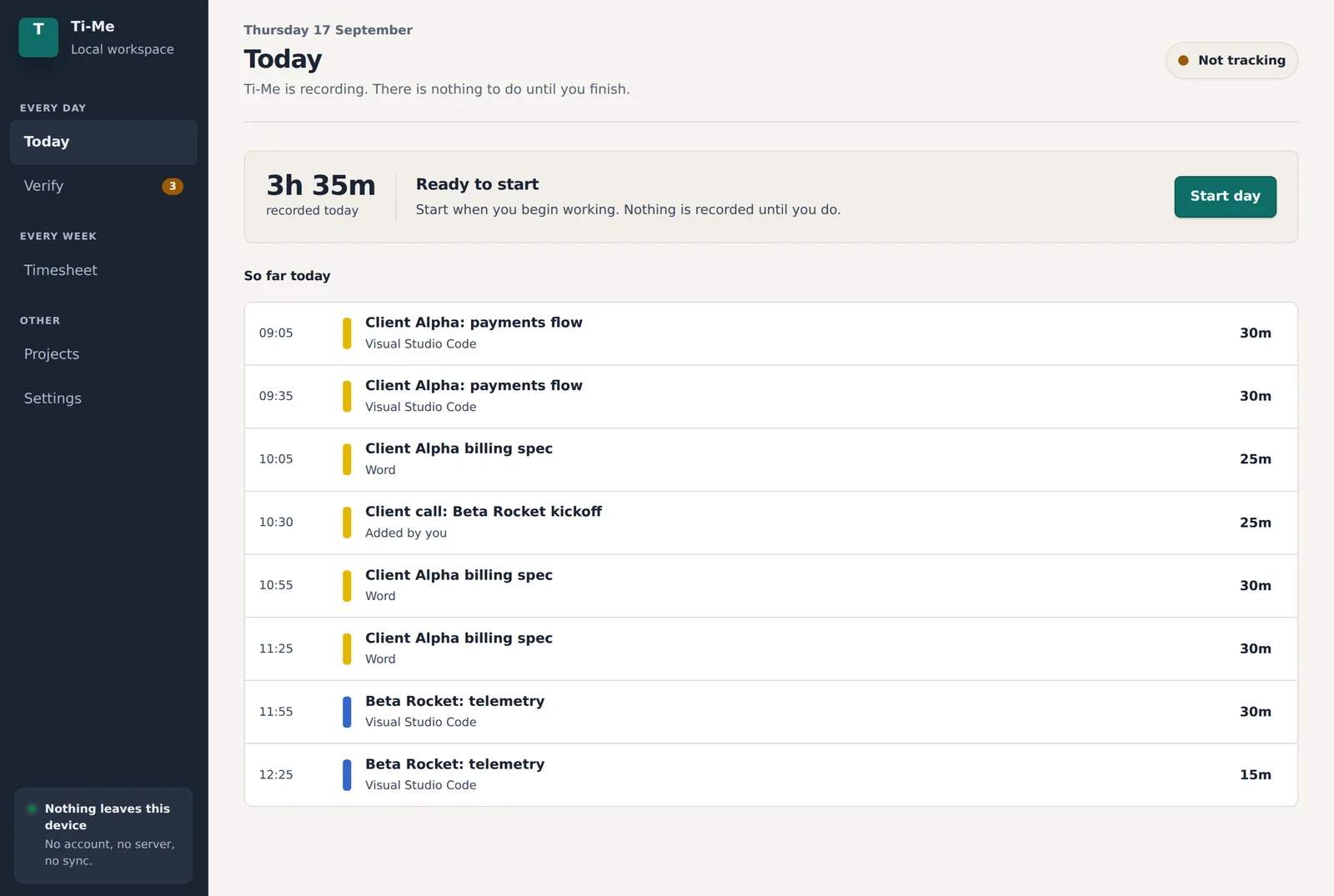
My own desktop app for independent contractors. It notes which application is in front of you, turns the day into short blocks to review, and builds timesheets only from days you have signed off. Nothing leaves the computer.
- RoleFounder: product, UX, data model and build
- PlatformDesktop: Windows and macOS
- Built withElectron, TypeScript, React and SQLite
- StatusAlpha, in daily use, with early access open
Why it matters
Time tracking looks simple. Underneath, it is not: capture that must not become surveillance, suggestions that must not quietly decide, rounding rules that must add up, and a record that must not shift after a client has seen it.
Ti-Me keeps all of that below the surface. On top, there are two jobs: do the work, then review the day. The same principle runs through my client work: strict rules and a careful data model underneath, and one clear decision at a time for the person using it.
Design decisions
Privacy built into the data model
The database has no place for web addresses, document paths, keystrokes, clipboard contents or screenshots, so they cannot be stored by mistake. There is no account, no server and no sync.
Suggestions, never decisions
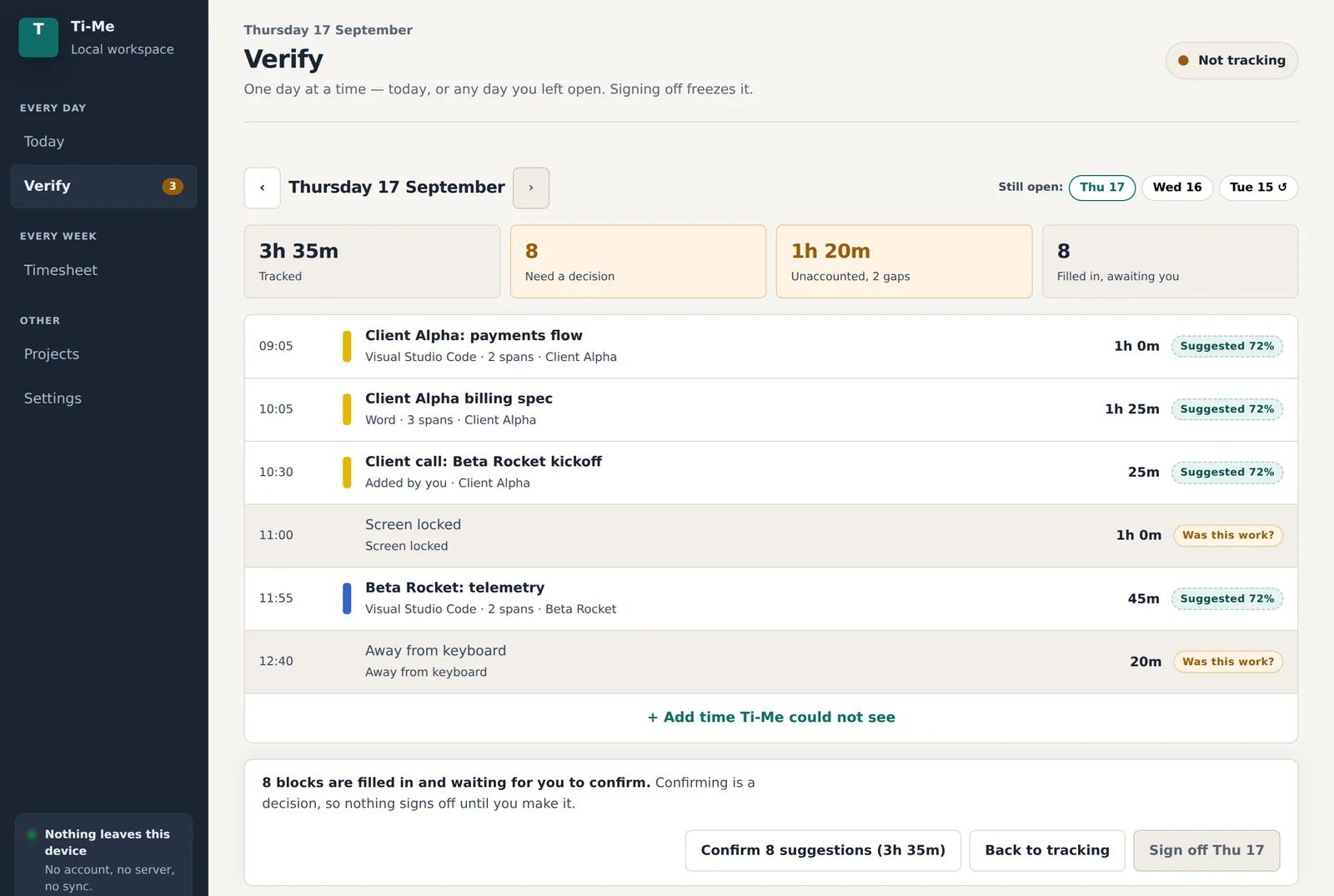
Ti-Me learns which project a piece of work usually belongs to and suggests it. Nothing counts until you confirm it, and confidence is capped so a suggestion never looks certain.
Rules you can read
Assignments come from rules you control and from what you have confirmed before. No AI model classifies your time.
A signed-off day stays signed off
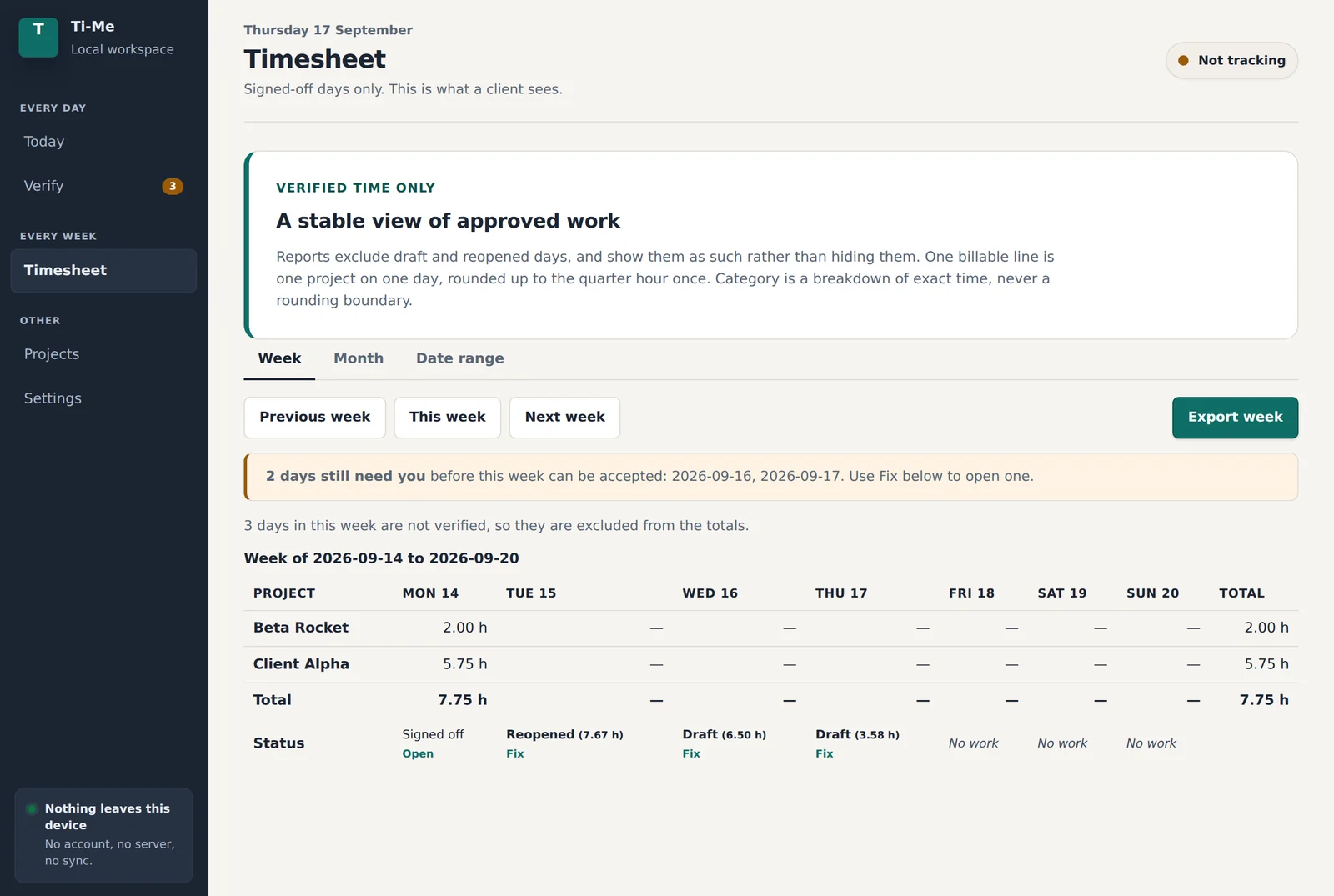
Signing off freezes a day. If you reopen it, it drops out of the totals until you sign it off again, so a timesheet always matches what was approved.
Billing rules that add up
One billable line is one project on one day, rounded up to the quarter hour once. Categories show exact time and never change the total.
Nothing is thrown away
Time that was not work goes to a Non-work project: out of the billable totals, but still in the record. Ti-Me never suggests it, because deciding what counts as work is your call.
Tested like a product
Strict TypeScript, a zero-warning lint gate, over 150 unit tests and end-to-end journeys that include automated accessibility checks.
Ti-Me now has a site of its own, where the record model, the privacy position and the pricing are set out in full. It will be sold once, for a fixed price, with no subscription.
Building a tool people have to trust?
I design the rules, the data and the screens together, so the product stays simple to use and holds up to scrutiny.