Work / BalaShoppa
case study · smme · inventoryBalaShoppa: stock control for shops that can’t count on signal.
A stock and sales app for spaza shops, market traders, hawkers and micro businesses. It is built to run fully on the phone the owner already has, with no account, no cloud dependency and no data bundle needed to use it.
- RoleFounder: product strategy, UX, design system and build
- PlatformAndroid (Expo and React Native)
- MarketSouth African micro and informal businesses
- StatusClosed testing on Google Play, heading to public release
The problem
Most small shops in South Africa keep stock in a notebook or in the owner’s head. That makes it hard to see what is running low, what is actually profitable, and what has quietly gone missing. It also leaves the owner with no records to show a supplier, an accountant or a lender.
Most inventory software assumes things these businesses don’t have: a stable connection, cheap data, a new phone, time for onboarding, and a willingness to hand business data to a cloud service. The design brief was to remove every one of those assumptions.
Key design decisions
Offline by default
Everything is stored in an encrypted database on the phone. There is no login and no server to reach, so the app opens and works in a shop with no signal. The first screen asks for consent, not a sign-up.
Built for the counter
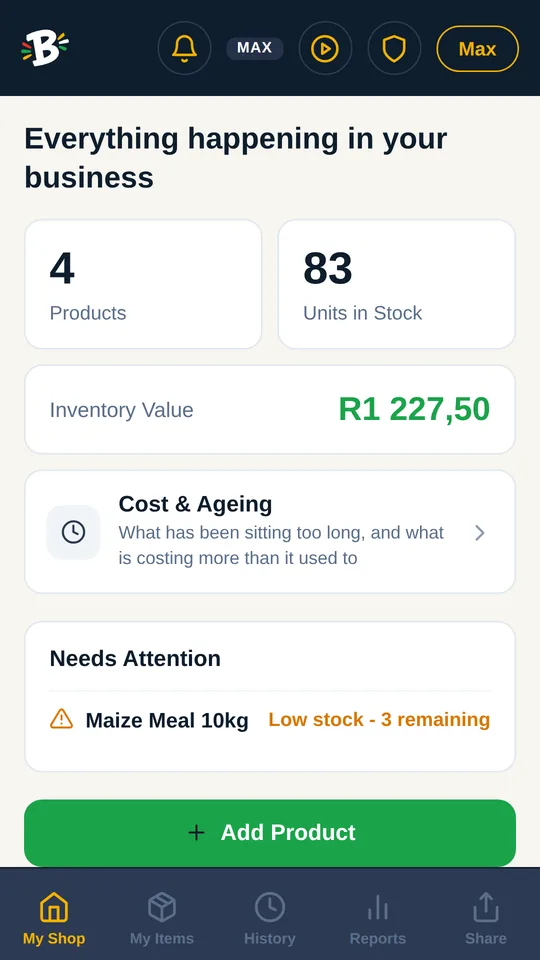
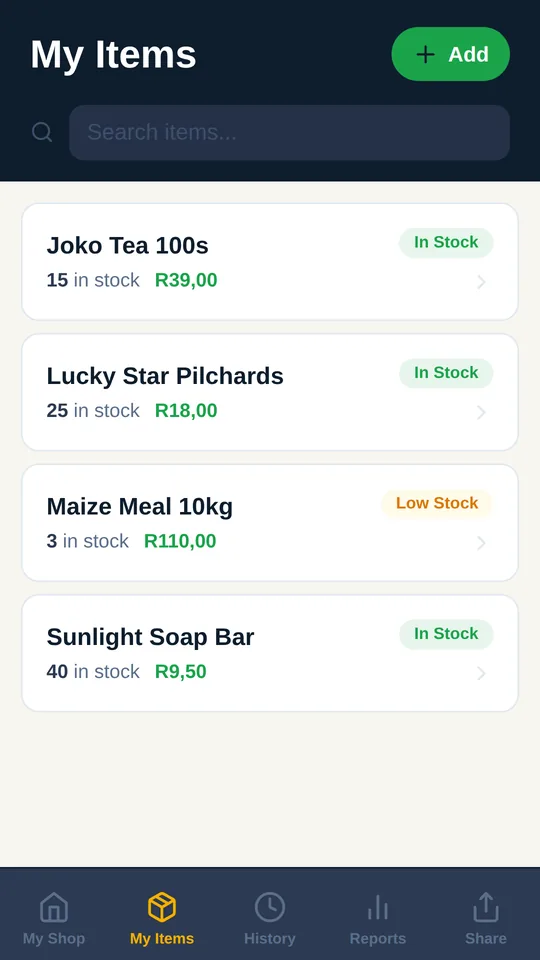
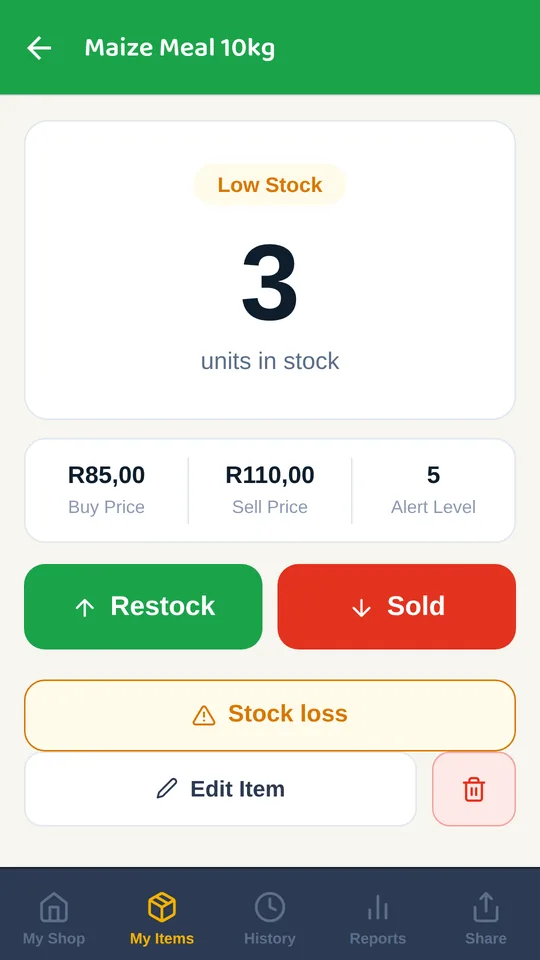
Large Restock and Sold buttons, clear low-stock warnings and plain labels, so recording a sale takes seconds. Numbers follow the South African format owners expect (R1 227,50).
Reports that don’t need the internet
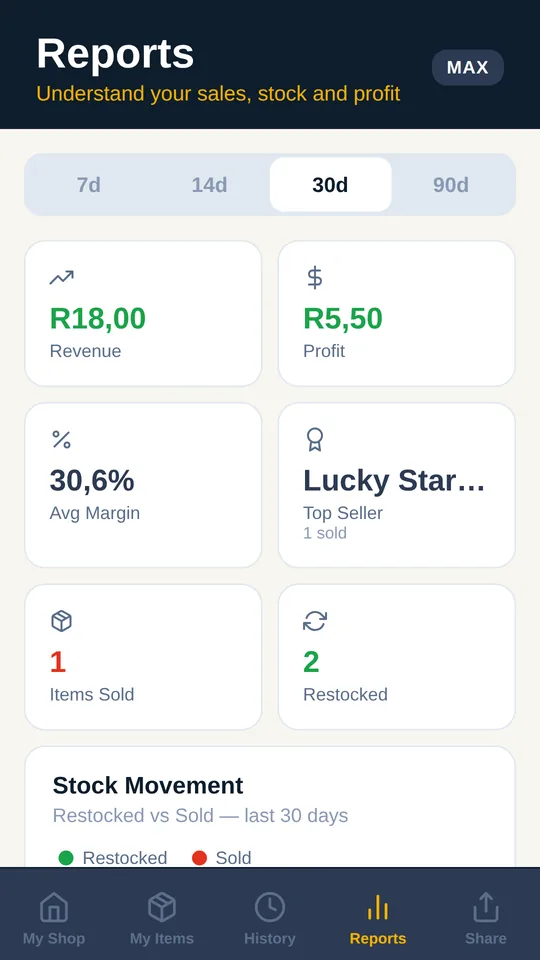
Revenue, profit, margin, top sellers and stock movement are all calculated on the phone, including cost and ageing views that show what has been sitting too long.
Records owners can use
Stock and sales records can be shared straight from the phone, ready for an accountant, a supplier or a funding application.
Compliance built in, not bolted on
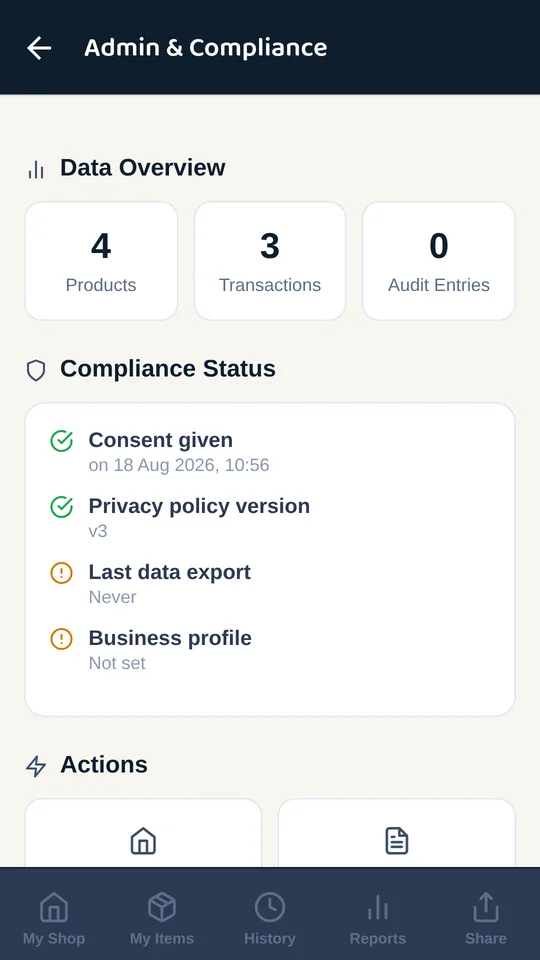
An Admin & Compliance area tracks consent, privacy policy versions, data exports and audit entries, so the app supports POPIA obligations from day one.
A business model that fits the market
Core stock tracking is free. Paid Pro and Max tiers add deeper insight, such as advanced reports, profitability charts, exports and audit tools, for shops that are ready to grow.
How it’s built
BalaShoppa is written in TypeScript on Expo and React Native. More than 500 automated tests and a suite of end-to-end browser tests run before each release, alongside dependency security checks. Releases go through staged Google Play testing tracks and on-device smoke tests before they reach users.
The same approach carries into client work: design decisions that are documented, testable and traceable, so the product can be shown to work, not just claimed to.
Building for low-connectivity or informal markets?
I design systems that work where networks, budgets and time are tight, with records and reporting built in from the start.